Sandwich Roofing Panel
A Sandwich Roofing Panel is an insulated roofing solution made with a PUF core between metal sheets, designed for roofing applications in industrial and commercial structures. These panels are used for sheds, warehouses, cold rooms and similar facilities. Buyers can source suitable panels through manufacturers and suppliers based on project requirements.
What Is a Sandwich Roofing Panel?
A Sandwich Roofing Panel is a composite roofing panel designed to combine insulation with a practical roof covering. The panel construction uses a Polyurethane Foam (PUF) core positioned between metal sheets. This layered structure makes the panel suitable for roofing applications where thermal insulation and a prefabricated roofing solution are required. Available product information identifies PUF as the insulation material and PPGI as a sheet material for certain roofing-panel configurations.
For buyers searching for a Sandwich Roofing Panel in Kolkata, the appropriate product should be selected according to the building design, required panel thickness, roofing area, sheet specification and installation requirements.
Construction and Material
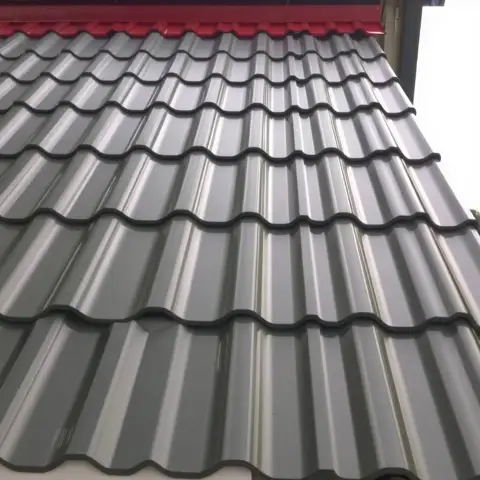
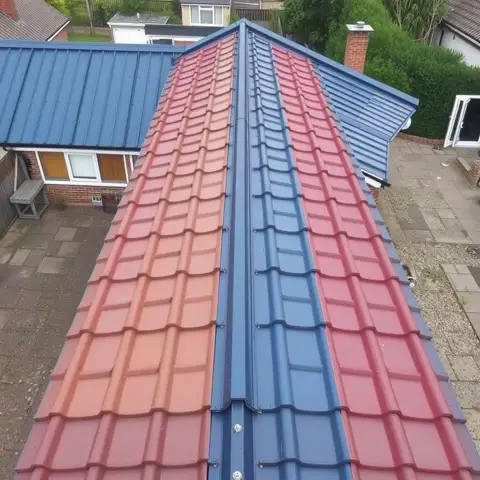
The basic construction consists of a PUF insulation core enclosed between metal sheets. Product-source information describes sandwich PUF panels as panels in which polyurethane foam is placed between metal sheets. Roofing configurations may use PPGI sheets with a color-coated surface, while panel profiles can vary according to the intended application.
One listed industrial insulated sandwich roofing configuration specifies a PUF core, PPGI sheet material, 30 mm panel thickness, 0.40 mm sheet thickness, 4 m length, 1000 mm width, 40 kg/m³ density and a corrugated surface finish. These specifications should be treated as a listed configuration rather than a universal specification for every panel available in the market.
Features of Sandwich Roofing Panels
Sandwich Roofing Panels can offer a practical combination of insulation and roofing coverage in prefabricated construction. Depending on the selected configuration, relevant features can include:
- PUF insulation core
- Metal sheet construction
- PPGI sheet facing in listed configurations
- Color-coated surface options
- Corrugated roofing profile
- Different panel thickness options
- Panel dimensions selected according to project requirements
Product information also shows that PUF roofing panels are available in different thicknesses and configurations, so buyers should confirm the exact specification with the selected supplier before placing an enquiry.
Benefits
The main benefits of using Sandwich Roofing Panels include:
- Integrated insulation: The PUF core provides an insulated construction within the roofing panel.
- Prefabricated construction: Panels can be supplied as ready roofing components for suitable building projects.
- Practical roofing solution: They are used for industrial and commercial roofing applications.
- Multiple thickness options: Market listings show different panel thicknesses for different project requirements.
- Suitable for large structures: Applications include industrial sheds, factories and warehouses.
- Customizable sourcing: Buyers can discuss dimensions, thickness and facing requirements with suitable suppliers.
Applications
Sandwich Roofing Panels are used in a range of construction and industrial environments. Common applications include:
- Industrial sheds
- Factory buildings
- Warehouses
- Cold storage facilities
- Commercial buildings
- Industrial roofing
- Prefabricated structures
- Poultry sheds
- Roof and cladding projects
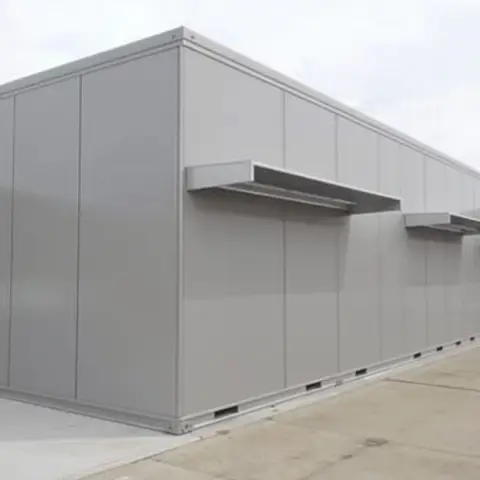
The specific application should determine the required thickness, panel dimensions, surface profile and sheet specification. Available product information also identifies roofing, cold rooms, clean rooms, walls, partitions and cladding among applications for related PUF sandwich-panel configurations.
Industries
Suitable applications may be found in:
- Warehousing and logistics
- Manufacturing
- Food-related facilities
- Cold storage
- Construction
- Commercial infrastructure
- Industrial facilities
- Prefabricated building projects
Available Sizes and Technical Details
The exact specifications vary between suppliers and product configurations. One listed roofing configuration provides a 30 mm panel thickness, 0.40 mm sheet thickness, 4 m panel length, 1000 mm width, PUF core, PPGI sheet material, 40 kg/m³ density and corrugated surface finish. Other market listings show roofing panels in thicknesses such as 30 mm, 40 mm, 50 mm, 60 mm and 80 mm, demonstrating that thickness selection depends on the available configuration and project requirement.
Customization and Selection
Before sourcing a Sandwich Roofing Panel, buyers should clearly define the required roof area, panel thickness, panel length and width, core material, sheet material, surface profile and color requirements. It is also useful to discuss the building environment and installation requirements with the supplier.
The panel should be selected based on the intended application rather than simply choosing the lowest quoted price. Buyers should request a complete technical specification so that different supplier quotations can be compared on the same basis.
Installation and Maintenance
Installation should follow the panel manufacturer's or supplier's recommended method and should be carried out according to the requirements of the roofing structure. Correct alignment, suitable joining and appropriate support conditions are important during installation.
Maintenance requirements depend on the panel construction and building environment. Buyers should confirm recommended inspection and cleaning procedures with the supplier, particularly for projects exposed to dust, moisture or industrial operating conditions.
Looking for Sandwich Roofing Panel Manufacturers or Suppliers in Kolkata?
We help buyers source Sandwich Roofing Panels from suitable manufacturers and suppliers in Kolkata and nearby industrial markets. Our sourcing assistance is designed to make the initial supplier-search process easier for businesses with specific roofing requirements.
We can help buyers understand the product requirements, identify suitable manufacturers or suppliers, compare available product options, share technical requirements with relevant sources, request quotations and connect with suitable product sources.
For a Kolkata project, buyers can provide the required panel thickness, dimensions, approximate quantity, sheet specification, application and delivery requirements. This information helps suppliers understand the enquiry and provide a more relevant quotation.